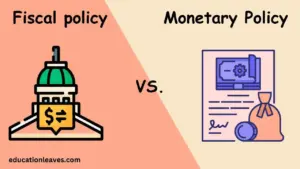
For decades, the global economic landscape was defined by the “Great Moderation”—a period of relatively stable growth and low inflation. Central banks and governments operated within a predictable framework where monetary policy managed the business cycle and fiscal policy stepped in primarily during major crises. However, the dawn of the 2020s has shattered this predictability. From the scarring effects of a global pandemic and geopolitical upheavals to the structural shifts of the green transition, the “old playbook” is being rewritten.
As we look toward the next decade, policymakers face a labyrinth of challenges. The interplay between central bank independence, soaring sovereign debt, and the urgent need for structural investment has created a high-stakes environment where the margin for error is razor-thin.
1. The Death of Low Inflation and the “Higher for Longer” Reality
The most immediate challenge is the structural shift in inflation dynamics. The era of “cheap everything”—labor from globalized markets, energy from stable geopolitical sources, and capital from low interest rates—has ended.
Structural Inflationary Pressures:
- Deglobalization: The shift from “just-in-time” to “just-in-case” supply chains increases costs. Nearshoring and friend-shoring, while enhancing security, are inherently more expensive than globalized trade.
- Demographics: Aging populations in major economies (China, Europe, the U.S.) are shrinking the labor pool, leading to upward pressure on wages.
- The Green Transition: The shift to renewables requires massive upfront investment and “greenflation”—the rising cost of minerals like lithium and copper.
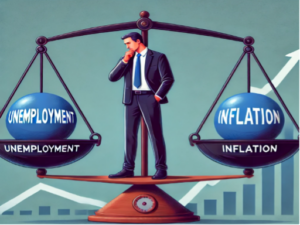
Monetary policy must now operate in an environment where inflation is more volatile. Central banks face the “last mile” problem: bringing inflation down to the 2% target without triggering a deep recession. The challenge lies in maintaining credibility while acknowledging that the neutral interest rate may be higher than previously thought.
2. Fiscal Dominance and the Debt Sustainability Trap
Fiscal policy has taken center stage, but it carries the weight of historic debt levels. Globally, public debt-to-GDP ratios are at levels not seen since World War II. This creates a phenomenon known as Fiscal Dominance, where the central bank’s ability to raise interest rates is constrained by the government’s need to service its debt.
The Challenges of High Debt:
- Crowding Out: High government borrowing can drive up interest rates for the private sector, stifling innovation and investment.
- Fiscal Space: Many nations have exhausted their “fiscal buffers.” Should another pandemic or a major conflict occur, the capacity to provide stimulus is severely limited.
- Interest Expense: As old debt is refinanced at higher current rates, interest payments are consuming a larger share of national budgets, often surpassing spending on defense or education.
Policymakers must find a way to implement “smart” fiscal consolidation—reducing deficits without killing growth or social stability.
3. The Coordination Paradox
In theory, monetary and fiscal policies should work in harmony. In practice, they are often at odds. If a central bank raises rates to cool inflation while the government increases spending to support households, they are effectively “stepping on the gas and the brakes at the same time.”
The challenge is to create a framework for Coordinated Normalization. This requires:
- Targeted Fiscal Support: Moving away from broad-based stimulus toward narrow support for the most vulnerable.
- Translucency: Governments must provide clear, long-term fiscal frameworks to give markets (and central banks) predictability.
4. Climate Change: The Macro-Critical Challenge
Climate change is no longer just an environmental issue; it is a core macroeconomic challenge. Both monetary and fiscal authorities are being forced to integrate climate risks into their frameworks.
Fiscal Challenges:
The “Green Investment Gap” is estimated in the trillions. Governments must fund the transition to net-zero while managing the “stranded asset” risk of fossil fuel industries. This requires innovative financing, such as green bonds and carbon pricing, which can be politically sensitive.
Monetary Challenges:
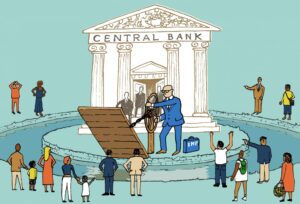
Central banks are debating their role in “greening” the financial system. Should they offer preferential rates for green loans? How do they account for “climate shocks”—such as droughts or floods—that cause sudden spikes in food and energy prices? This risks “mission creep,” where central banks are asked to solve social problems beyond their mandate of price stability.
5. Digital Currencies and the Future of Money
The rise of Central Bank Digital Currencies (CBDCs) and private cryptocurrencies presents a dual-edged sword.
- Financial Inclusion vs. Stability: CBDCs could modernize payment systems and reach the unbanked. However, if not designed correctly, they could lead to “bank runs” on traditional commercial banks during times of stress.
- Monetary Sovereignty: The potential for “stablecoins” issued by tech giants to bypass national monetary systems poses a threat to a central bank’s ability to control the money supply and interest rates.
Policymakers must develop regulatory frameworks that foster innovation while ensuring that the “unit of account” remains firmly under public control.
6. Managing the Wealth Gap and Social Cohesion
Years of ultra-low interest rates and Quantitative Easing (QE) contributed to an explosion in asset prices, benefiting those who own stocks and real estate while leaving renters and wage-earners behind. This inequality fuels populism, which in turn pressures governments toward short-termist fiscal policies.
Future fiscal policy must address structural inequality through tax reform and investment in human capital (education and healthcare). Failure to do so risks a breakdown in the social contract, making it impossible to implement the difficult economic reforms required for long-term stability.
Conclusion: The Path Forward
The future of monetary and fiscal policy will be defined by agility and integration. The silos of the past must be broken down. Central banks will need to maintain their independence while navigating a world where inflation is driven more by supply shocks than by demand. Governments must return to fiscal discipline while simultaneously funding the most significant technological and environmental transition in human history.
This “New Normal” requires a shift in focus from short-term stabilization to long-term resilience. Success will depend on the ability of leaders to communicate complex trade-offs to a public that is increasingly weary of economic volatility. The stakes are nothing less than the stability of the global financial order.
Key Takeaways for Global Markets
| Challenge | Impact on Policy | Market Sentiment |
| Sticky Inflation | Higher terminal rates | Volatility in bond markets |
| High Sovereign Debt | Selective fiscal tightening | Risk premium on “fiscal laggards” |
| Energy Transition | Massive public/private capex | Growth in ESG-focused assets |
| Digital Finance | New regulatory frameworks | Disruption of traditional banking |
This article provides a comprehensive overview of the shifting paradigms in economic governance, intended for informed readers, investors, and policy enthusiasts seeking to understand the complexities of the modern global economy.