In the complex machinery of global economics, few mechanisms are as vital—or as scrutinized—as the strategies employed by central banks to manage inflation. As we navigate the economic landscape of 2026, the concept of Inflation Targeting (IT) remains the bedrock of monetary policy for over 40 countries, representing approximately 70% of global GDP. However, the application of this strategy has evolved significantly from its rigid origins in the early 1990s.
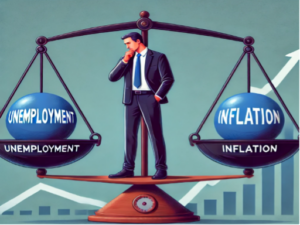
Today, central banks like the Federal Reserve, the European Central Bank (ECB), and the Bank of England are not merely chasing a number; they are balancing a delicate “trilemma” of price stability, financial resilience, and sustainable employment.
The Evolution of the Inflation Targeting Framework
Inflation targeting began as a straightforward commitment: a central bank would announce a medium-term numerical target for inflation and adjust interest rates to achieve it. This “anchor” was designed to manage public expectations—if people believe inflation will stay at 2%, they are less likely to demand drastic wage increases, creating a self-fulfilling prophecy of stability.
By 2026, we have seen a shift from “Strict Inflation Targeting” to “Flexible Inflation Targeting.” This modern approach allows central banks to look past temporary price shocks (like a sudden spike in energy costs) to focus on long-term trends.
Key Differences in Strategy
| Feature | Traditional Targeting | Modern Flexible Targeting |
| Primary Goal | Price Stability only | Price Stability + Full Employment |
| Time Horizon | Short-term (12-18 months) | Medium-term (2-3 years) |
| Tolerance | Narrow bands (e.g., 1-3%) | Average Inflation Targeting (AIT) |
| Communication | Highly Technical | Transparent & Narrative-driven |
Current Global Trends: The 2026 Outlook
As of early 2026, the global economy is entering a phase of “regional cross-currents.” After the inflationary surge of the early 2020s, disinflation has taken hold, but the pace is uneven.
- The United States: The Federal Reserve continues to manage a “higher-for-longer” interest rate environment. Despite headline inflation cooling, core inflation remains sticky at approximately 3.2% due to persistent service-sector demand and a tight labor market.
- The Eurozone: In contrast, the ECB is facing a scenario where inflation might actually undershoot its 2% target, stabilizing around 1.7%. This has led to discussions about monetary easing to prevent economic stagnation.
- Emerging Markets: Countries like Brazil have refined their legal frameworks (such as Presidential Decree 12,079) to allow for greater flexibility in how targets are met, prioritizing long-term stability over short-term volatility.
Strategic Tools Beyond Interest Rates
While the “Policy Rate” (like the Fed Funds Rate) remains the primary lever, central banks have expanded their toolkit to maintain the effectiveness of inflation targeting:
- Forward Guidance: By explicitly stating where they expect rates to be in the future, central banks influence long-term borrowing costs today.
- Quantitative Tightening (QT): Reducing the central bank’s balance sheet to drain excess liquidity from the financial system.
- Macroprudential Policy: Using regulations on bank lending to ensure that aggressive interest rate hikes don’t trigger a banking crisis.
The New Frontier: CBDCs and Inflation
One of the most significant shifts in central bank strategy involves the integration of Central Bank Digital Currencies (CBDCs). As we move deeper into 2026, the interaction between digital currency and inflation targeting has become a focal point for researchers.
CBDCs offer the potential for more direct transmission of monetary policy. For instance, an interest-bearing CBDC could allow a central bank to pass rate changes directly to consumers, bypassing the delays of traditional commercial banks. However, this also introduces risks of “spending runs,” where rapid shifts in digital holdings could cause sudden inflationary or deflationary spikes.
Economic Insight: The success of inflation targeting in 2026 depends less on the target itself and more on the credibility of the institution. If the public trusts the central bank, expectations remain “anchored,” even during periods of global instability.
Challenges to the Strategy
Despite its dominance, inflation targeting faces three major headwinds in the current era:
- Fiscal Dominance: High levels of sovereign debt can pressure central banks to keep interest rates low to make government borrowing cheaper, even if inflation is rising.
- Supply-Side Shocks: Trade tensions and “greenflation” (inflation caused by the transition to renewable energy) are factors that interest rates cannot easily fix.
- The Term Premium: Investors are increasingly demanding higher returns for long-term lending due to global uncertainty, which can weaken the impact of central bank rate cuts.
Conclusion: The Path Forward
Inflation targeting has proven to be remarkably durable because it has adapted. In 2026, the strategy is no longer a rigid rulebook but a framework of “constrained discretion.” Central banks must remain transparent enough to anchor expectations but flexible enough to respond to a world of fragmented trade and digital finance.
As we look toward the end of the decade, the focus will likely shift from merely “fighting inflation” to “managing volatility”—ensuring that the pursuit of price stability does not come at the cost of financial or social stability.
Would you like me to analyze the specific inflation targets and current interest rate stances of a particular country for you?