The UK commercial property market is navigating a fascinating period of recovery and recalibration as we move through May 2025. After a challenging phase marked by elevated interest rates and economic uncertainty, early indications from Q1 2025 suggest a renewed vigour, driven by easing monetary policy, shifting occupier demands, and a heightened focus on sustainability. For investors, developers, and occupiers, understanding these evolving dynamics is crucial for charting a successful course in the months ahead.
A Turn in the Tide: Interest Rates and Investor Confidence
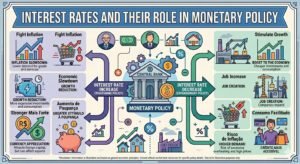
The most significant shift influencing the commercial property market is the evolving interest rate environment. Having experienced a sharp increase in borrowing costs throughout 2022 and 2023, peaking around 5.25% in August 2024, the Bank of England has now begun to ease its monetary policy. As of May 2025, the Bank Rate stands at 4.25%, with market economists anticipating further cuts throughout the year, potentially bringing rates down to 3.5% to 3.75% by year-end.
This anticipated downward trend in interest rates is a welcome relief for the property sector:
- Reduced Financing Costs: Lower rates directly translate to cheaper borrowing for property acquisitions and development, making investments more attractive and improving debt serviceability for landlords.
- Yield Compression: The cost of debt directly impacts property yields. As interest rates fall, property yields (the rental income as a percentage of property value) typically compress, leading to an increase in capital values. Q1 2025 data from CBRE and Newmanor Law confirms this, with capital values for UK commercial real estate rising by 0.3% in March and a total return of 2.1% for the first quarter of 2025.
- Increased Transaction Volumes: Higher financing costs had significantly slowed transaction volumes in late 2024. With rates coming down, investor confidence is gradually returning, with forecasts suggesting total investment for 2025 could rise by around 5%, reaching approximately £53 billion.
However, the Bank of England still projects a “bumpy path” for inflation, with a temporary rise expected in Q3 2025 due to global energy costs and regulated prices. This implies that while the easing cycle has begun, the pace will be careful and gradual, and external shocks (such as escalating geopolitical situations or new tariffs) could still introduce volatility.
Sectoral Performance: Divergence and Resilience
The recovery in the UK commercial property market is not uniform across all sectors. Distinct trends are emerging:
- Industrial & Logistics: This sector continues its robust performance, building on the strong demand driven by e-commerce expansion and evolving supply chain strategies.
- Performance: Industrial assets recorded total returns of 0.8% in March and 2.3% for Q1 2025. Capital values rose by 0.4%, and rental values increased by 0.3%.
- Drivers: The structural shift towards online retail, coupled with an increasing focus on onshore manufacturing and resilient supply chains, continues to fuel demand for modern, well-located warehousing and logistics facilities.
- Outlook: Lambert Smith Hampton (LSH) predicts industrial and logistics will continue to outperform, forecasting total returns of 8.4% per annum between 2025 and 2028. Rental growth is expected to continue (around 4% in 2025), driven by occupiers prioritising quality. Despite strong demand, speculative development has remained cautious due to rising construction costs, which could lead to a tighter supply pipeline and support rental growth. Overseas capital remains keenly interested in this sector.
- Retail: After a challenging decade, the retail property sector is showing surprising signs of recovery, albeit with significant divergence.
- Performance: Retail led the market in Q1 2025, posting a total return of 2.8%, with capital values rising by 0.4%. Shopping Centres (0.5%) and Retail Warehouses (0.4%) showed the highest increases.
- Drivers: This recovery is highly selective. Prime retail locations, particularly those offering an “experience” alongside shopping, are performing well. Retail parks and out-of-town retail warehouses continue to benefit from their convenience and lower operational costs compared to traditional high street locations.
- Outlook: Knight Frank forecasts retail to achieve returns of 8.9% in 2025, outperforming the wider commercial property market (5.1%). Retail warehousing is predicted to be a standout performer (11.4% returns). While high streets continue to face challenges, those with strong local demographics and repositioning efforts are finding success. The “right-sizing” of the retail footprint, coupled with strong fundamentals in favoured locations, is creating a powerful case for investors.
- Office: The office market remains complex, defined by a flight to quality and the lasting impact of hybrid working models.
- Performance: The office sector delivered a 1.7% total return in Q1 2025, with capital values up 0.3% in March. This growth was largely driven by Central London offices, where values rose by 1.0% and rental values increased by 1.7%. Conversely, Outer London and M25 office values fell by 0.5%, highlighting clear geographic divergence.
- Drivers: Occupiers are increasingly demanding Grade A, highly sustainable, amenity-rich spaces that support collaboration and employee wellbeing. This is leading to a significant two-tier market, with prime, ESG-compliant buildings commanding strong rents and experiencing robust demand, while secondary and outdated stock faces rising vacancy rates and declining values.
- Outlook: CBRE forecasts prime rental growth of around 6% across UK office markets in 2025, with Central London (especially the City) outperforming. Employee growth in office-based employment is expected to drive demand. However, the overall office vacancy rate is not expected to peak until mid-2026, which could mildly dampen capital values in the short term for the secondary market. Retrofitting older buildings to meet modern environmental standards is a significant trend.
The Overarching Influence of ESG and Sustainability
Environmental, Social, and Governance (ESG) factors are no longer a niche consideration but a fundamental driver of value in the UK commercial property market.
- Regulatory Imperatives: From 2025, landlords must ensure rental properties meet an EPC (Energy Performance Certificate) Band C or higher, with potential fines for non-compliance. This is driving significant investment in retrofitting and upgrades. Broader UK Sustainability Disclosure Requirements (SDR) and the EU’s Corporate Sustainability Reporting Directive (CSRD) are also increasing the pressure for comprehensive ESG disclosures from property owners and managers.
- Occupier and Investor Demand: Tenants are increasingly prioritising energy-efficient and healthy workspaces, aligning with their own corporate sustainability goals. Investors are also placing a higher premium on “green” assets, recognizing that sustainable buildings command higher rents, retain value better, and are less exposed to stranded asset risk.
- Value Gap: CBRE’s latest UK sustainability index shows a widening gap in capital and rental values between more energy-efficient and less energy-efficient buildings, underscoring the financial materiality of ESG performance. This trend is expected to accelerate through 2025.
Other Key Considerations
- Finance Conditions: Mortgage rates for property investment are projected to remain between 4% and 5% throughout 2025. While higher than historical lows, this offers more certainty than the volatility of recent years. Lenders are also becoming more active as market sentiment improves.
- Planning and Development: Rising construction costs and ongoing planning delays continue to hamper new development, particularly in the industrial and logistics sectors. This constrained supply, coupled with steady demand, will likely support rental growth in prime segments.
- Alternative Asset Classes: Investor interest in alternative sectors like student accommodation, healthcare (care homes, medical facilities), and life sciences continues to grow. These sectors are often driven by robust demographic and social trends, offering attractive defensive characteristics and long-term growth prospects.
Conclusion: A Market in Transition
The UK commercial property market in May 2025 is clearly in a phase of transition from downturn to recovery. The easing interest rate cycle is providing a much-needed boost to investor confidence and transaction volumes, setting the stage for capital value growth.
However, this recovery is highly selective and driven by structural changes. The “flight to quality” in the office sector, the nuanced recovery in retail, and the sustained strength of industrial and logistics underscore the importance of sector-specific strategies and a deep understanding of occupier needs. Above all, ESG credentials are no longer a “nice-to-have” but a fundamental driver of asset value, rental growth, and investor appeal.
For those looking to invest or operate in the UK commercial property market, 2025 promises to be a dynamic year where adaptability, strategic asset selection, and a strong commitment to sustainability will be paramount for capitalising on the emerging opportunities. The market is recovering, but it is also fundamentally evolving.