The relationship between tax policy and income distribution is one of the most debated topics in modern economics. As nations grapple with rising wealth gaps and the shifting demands of a digitalized global economy, the mechanisms by which governments collect and redistribute revenue have moved to the forefront of political and social discourse. Tax policy is not merely a tool for funding public services; it is a primary lever for influencing how the benefits of economic growth are shared across society.
The Role of Taxation in Wealth Distribution
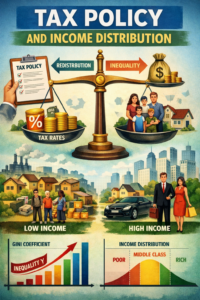
At its core, tax policy serves three primary functions: revenue generation, economic stabilization, and redistribution. While all three are essential, the redistributive function specifically targets the “Gini coefficient”—a statistical measure of economic inequality. Without government intervention through taxes and transfers, market-driven economies tend to concentrate wealth among those with the highest capital and specialized skills.
To counteract this concentration, policymakers often employ various tax structures, primarily categorized into three types:
- Progressive Taxation: This is the most common tool for addressing income distribution. Under a progressive system, the tax rate increases as the taxable amount increases. The logic is based on the “ability-to-pay” principle, suggesting that those with higher incomes can contribute a larger percentage of their earnings without compromising their basic standard of living.
- Regressive Taxation: In this system, the tax rate decreases as income rises, or the tax burden falls more heavily on lower-income individuals in proportion to their earnings. Sales taxes and value-added taxes (VAT) are often cited as regressive because lower-income households spend a larger share of their income on taxable goods than wealthier households.
- Proportional (Flat) Taxation: This system applies the same tax rate to all taxpayers, regardless of income. While it appears “fair” on the surface, critics argue it ignores the diminishing marginal utility of money, where $100 is worth significantly more to a low-wage worker than to a billionaire.
Key Instruments for Reducing Inequality
To effectively influence income distribution, governments utilize specific instruments within the tax code. These go beyond simple income tax brackets and delve into the complexities of capital, inheritance, and corporate profits.
1. Personal Income Tax (PIT)
The PIT is the cornerstone of progressive redistribution. By utilizing marginal tax brackets, governments can ensure that the highest earners contribute the most to the national treasury. However, the effectiveness of PIT is often undermined by “tax expenditures”—loopholes, deductions, and credits that frequently benefit high-net-worth individuals who have the resources to engage in sophisticated tax planning.
2. Capital Gains and Wealth Taxes
A significant portion of the wealth at the top of the distribution comes from assets (stocks, real estate, and businesses) rather than labor income. Capital gains are often taxed at lower rates than ordinary income in many jurisdictions to encourage investment. However, this creates a disparity where a CEO’s investment income is taxed more lightly than a teacher’s salary. Emerging debates often focus on “Wealth Taxes,” which target the total value of assets held by an individual rather than just their annual income.
3. Corporate Taxation and Global Minimums
In an era of globalization, multi-national corporations can shift profits to low-tax jurisdictions, a practice known as Base Erosion and Profit Shifting (BEPS). This reduces the tax base available for domestic redistribution. Recent international agreements on a global minimum corporate tax rate represent a collective effort to prevent a “race to the bottom,” ensuring that corporate profits contribute to the social contract of the countries where they operate.
The Trade-off: Equity vs. Efficiency
A central challenge for policymakers is the perceived trade-off between equity (fair distribution) and efficiency (economic growth). This is often illustrated by the “Laffer Curve,” which suggests that if tax rates are too high, they may discourage work, investment, and innovation, eventually leading to lower total tax revenue.
- The Incentive Argument: Opponents of high progressive taxes argue that heavy taxation on high earners and corporations stifles the very activity that creates jobs. They suggest that lower taxes on the wealthy lead to “trickle-down” effects, where increased investment stimulates the entire economy.
- The Human Capital Argument: Proponents of redistribution argue that inequality itself is an efficiency killer. High levels of wealth concentration can lead to underinvestment in “human capital”—the education and health of the broader population. By using tax revenue to fund public education, infrastructure, and healthcare, governments create a more productive and stable workforce, which fosters long-term, sustainable growth.
Modern Challenges: Automation and the Digital Economy
The 21st century has introduced new complexities to tax policy. The rise of the “gig economy” and remote work has made it harder to define where income is earned and how it should be taxed. Furthermore, automation and Artificial Intelligence (AI) threaten to shift the share of national income from labor to capital owners.
As machines replace human workers, the income tax base may shrink. This has led some economists to propose a “Robot Tax” or a more robust “Universal Basic Income” (UBI) funded by higher taxes on automated production. These policies aim to ensure that the efficiency gains from technology do not solely benefit a small group of tech-capitalists but are redistributed to those whose livelihoods are displaced.
Fiscal Policy and the Social Safety Net
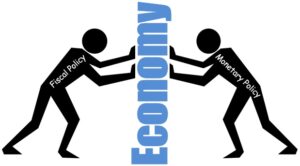
Tax policy does not work in a vacuum; its impact on income distribution is completed by how that revenue is spent. This is known as “Fiscal Policy.” A progressive tax system is only effective at reducing inequality if the revenue is directed toward “transfer payments” and public services that benefit the lower and middle classes.
- Conditional Cash Transfers: Programs that provide financial assistance to low-income families, often tied to requirements like school attendance or vaccinations.
- Social Insurance: Unemployment benefits, disability insurance, and pension systems (like Social Security) act as “automatic stabilizers” that prevent individuals from falling into poverty during economic downturns.
Conclusion
Tax policy is the primary bridge between a market-driven economy and a stable, equitable society. While the debate over the “perfect” tax rate continues, the consensus among many international organizations, including the IMF and OECD, is that extreme income inequality can hinder economic stability.
A balanced approach—one that maintains incentives for innovation while closing loopholes and ensuring that capital is taxed as fairly as labor—is essential. By aligning tax structures with the realities of the modern digital and globalized world, nations can ensure that income distribution supports not just a wealthy few, but a thriving, inclusive economy for all.
Would you like me to create a complementary article on how different countries specifically implement these “Wealth Taxes” to compare their effectiveness?